
Understanding Knee Osteoarthritis — When Everyday Movement Hurts
What Is Knee Osteoarthritis?
Climbing stairs, walking to the car, or simply getting up from a chair shouldn’t feel like an effort. But for millions of adults, those familiar aches and stiffness signal a condition called knee osteoarthritis (OA), a slow-moving but common joint disorder that can make daily life more difficult over time.
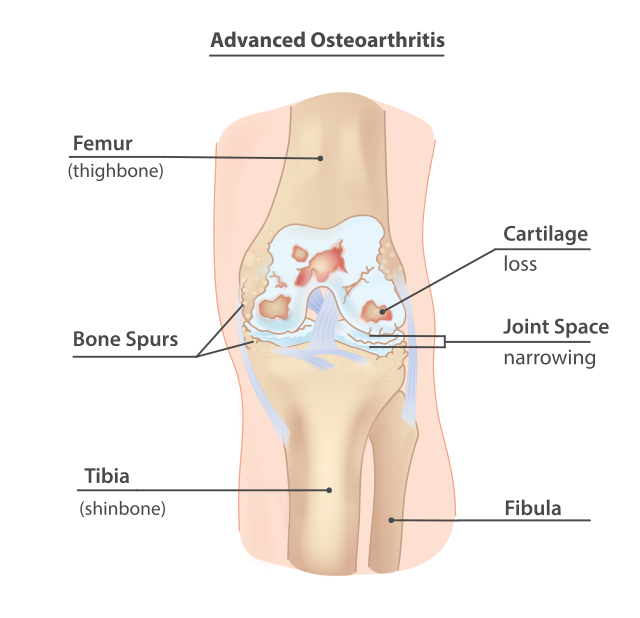
Osteoarthritis occurs when the smooth, protective cartilage that cushions the ends of bones begins to break down. In the knee, this means the cartilage between the femur (thighbone) and the tibia (shinbone) starts to wear away. As that protective layer thins, the bones can rub more closely together, leading to discomfort, swelling, and reduced flexibility.
What’s Happening Inside the Joint
A clear way to picture knee OA is through a simple medical illustration. In a healthy knee, cartilage acts like a slick, rubbery pad that prevents friction. The joint space; the gap you see between the bones in an X-ray, stays even and open, allowing smooth movement.
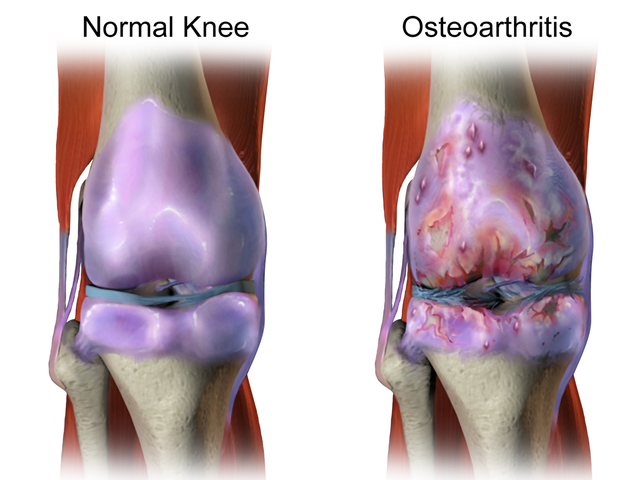
With osteoarthritis, that joint space gradually narrows as cartilage erodes. The body sometimes responds by forming bone spurs (osteophytes) around the edges of the joint. These small, bony growths are visible in many diagrams and can contribute to stiffness and pain. Over time, inflammation may develop in the surrounding tissue, further limiting mobility.
Common Risk Factors
Knee osteoarthritis can affect anyone, but several factors raise the risk:
• Age: Cartilage becomes less resilient over time.
• Weight: Excess body weight increases stress on knee joints.
• Previous Injury: Past ligament or meniscus injuries can lead to early wear.
• Genetics and Family History: Some people inherit joint-structure tendencies that make OA more likely.
• Repetitive Strain: Certain occupations or sports that require kneeling or heavy lifting add stress to the knees.
Recognizing these risk factors early can help people seek care and guidance before symptoms worsen.
Current Ways to Manage Symptoms
Although there is no cure for osteoarthritis, many people find ways to manage symptoms and maintain mobility:
• Low-impact exercise such as swimming, cycling, or walking strengthens muscles around the joint.
• Physical therapy improves range of motion and posture.
• Weight management can lessen daily stress on the knees.
• Heat or cold therapy may ease stiffness and swelling.
• Medical evaluation helps determine safe, individualized care options.
Healthcare providers may also suggest assistive devices or braces to support the joint during activity.
The Role of Clinical Research
Every advance in managing osteoarthritis begins with clinical research. Through carefully designed studies, researchers explore new approaches that may improve comfort or function for people living with OA.
Clinical studies follow strict safety and ethical guidelines set by the U.S. Food and Drug Administration (FDA) and independent review boards. Participants are monitored closely by qualified medical professionals throughout each study.
Joining a research study does not guarantee direct medical benefit, but it does help expand knowledge about knee osteoarthritis and may contribute to better options for future care.ols and care options in the future.

Living With Knee OA: Practical Tips
• Stay active within your limits; motion keeps joints nourished.
• Use supportive footwear to absorb shock and reduce knee pressure.
• Warm up before activity and stretch afterward to protect ligaments.
• Track symptoms in a journal to discuss patterns with your healthcare provider.
Small daily adjustments can make a noticeable difference in how the joint feels over time.
Learn More About Ongoing Research
If you or someone you know is living with knee osteoarthritis, FutureSearch Trials is currently enrolling participants for a research study in both our Austin and Dallas locations.
To learn more or find out if you may qualify, contact the research team nearest you. Austin: ATXclinic@fstrials.com or 512-380-9595. Dallas: 214-361-7700